


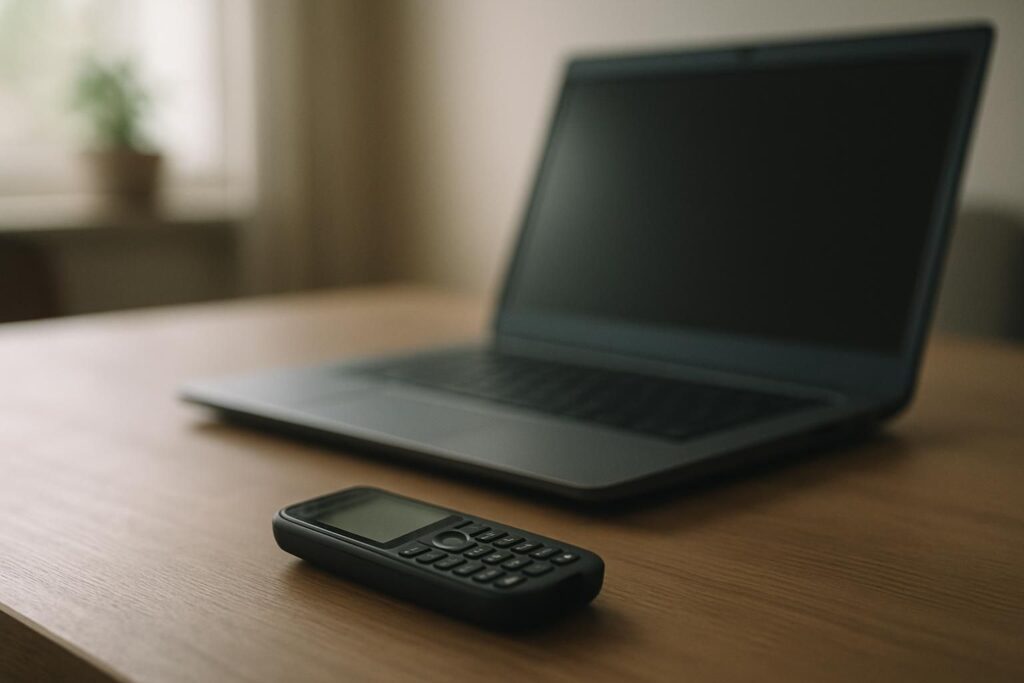
This question has a short answer that saves a lot of reading. Sharing a connection means the phone has to broadcast Wi-Fi, which needs a Wi-Fi chip. Most basic phones do not have one. Not a weak one, not a disabled one: the component is not on the board, and no setting, update or app will ever change that.
The operating system decides, not the brand and not the 4G
You can predict the answer for almost any phone on the market from one line of its spec sheet. This is the single most useful shortcut in the category, and it saves reading a hundred listings that are vague on purpose.
| Operating system | Typical phones | Can it share a connection? |
|---|---|---|
| Series 30+ (S30+) | Nokia 105, 110, 235 4G, 2660 Flip, 5710 XA | No. No Wi-Fi chip at all, ever |
| Mocor RTOS | Most senior and emergency phones, many no name flips | No. Same reason |
| KaiOS | Nokia 8110, 6300 4G, 2780 Flip, older TCL flips | Yes technically, but support ended in 2025 |
| Android (including Go edition) | Unihertz Jelly, Android flips, small Android phones | Yes. Hotspot is part of the operating system |
The trap is 4G. A phone can be a perfectly good 4G phone, with fast mobile data, and still have no way to share it, because receiving cellular data and broadcasting Wi-Fi are two different radios. A listing that says 4G LTE tells you nothing about tethering. Look for Wi-Fi in the specification, then look for the operating system, in that order.
The KaiOS problem
If you have been researching this for a while you will have seen the Nokia 6300 4G and the Nokia 2780 Flip recommended for exactly this. Both genuinely did it. Both ran KaiOS, whose support ended in 2025, and neither is on sale in the United States now. The same collapse took WhatsApp off those handsets, which we cover in which Nokia phones run WhatsApp.
If you already own one, the hotspot still works: it is a local radio function that does not depend on anyone’s servers. It is buying one today that no longer makes sense.
What actually works in 2026
The minimal phone that documents it
The Light Phone III has hotspot as one of the tools you switch on from its web dashboard, alongside directions, notes and music. The maker documents it plainly: you name the network, set a password, and your laptop joins it like any other. This is the only phone in this article where the manufacturer’s own support pages describe the feature step by step, which is why it leads the list.
One condition applies and it is not the phone’s fault: your plan has to permit tethering. Light’s own service terms are explicit that unlimited subscribers need the hotspot plan to use the phone this way.
If tethering is the whole point, do not buy a phone for it
Every phone that shares a connection is a compromise: it drains the battery you need for calls, and it ties your data to a plan that may forbid tethering. A dedicated pocket hotspot such as the GlocalMe U3 carries its own battery and its own data, connects up to ten devices, and works in more than 200 countries without a SIM card. It also leaves your phone free to stay a genuinely dumb phone, which is presumably why you are here.
The rugged Android flip
The rugged flip sold as the Unifone S22 is the same specification as the S22 Flip that carriers sold: Android 11, a 2.8 inch touchscreen, IP68 water resistance and a military drop rating. T-Mobile publishes a support page titled Configure mobile hotspot for the S22 Flip, which is as close to proof as this category gets. It is heavy, it is ugly, and it is the most reliable tethering clamshell you can currently order.
The small Android phones
Every Unihertz Jelly does this, and the manufacturer’s manual for the range describes both setting up a Wi-Fi hotspot and tethering over Bluetooth, noting that Bluetooth is slower. The Jelly 2E is the cheap way in, the Jelly Star the popular one, and the Jelly Max the only one here that shares a 5G connection rather than a 4G one, which is worth the difference if you tether a laptop for work.
These are full Android phones. If you are buying one to be a hotspot with a phone attached, that is a sensible reason to own one. If you are buying it to escape a smartphone, read the trade offs in a phone with just WhatsApp and Maps first.
The budget Android flip, with one honest reservation
The V3 flip runs Android 11 Go and lists Wi-Fi, Bluetooth and GPS in the seller’s own title, at a fraction of the rugged flip’s price. Android includes hotspot as standard, under Settings, Network and internet, Hotspot and tethering. But the seller does not document the feature anywhere, and we have not seen it confirmed by the manufacturer. Treat it as very likely rather than certain, and buy from somewhere you can return it if tethering is the reason you are buying.
The phones that will never do it
This is worth stating positively, because half the search results in this category are listicles that quietly include phones that cannot. Anything running S30+ or Mocor RTOS is out, permanently. That covers the entire Nokia keypad range on sale today, almost every phone marketed for seniors, and most unbranded flips including the UNIWA V202T, which is an excellent simple phone and will never be a hotspot.
The related search people run is non smartphone with Wi-Fi, and the answer is narrower than expected: outside KaiOS and Android, essentially no keypad phone has Wi-Fi at all. Not for hotspot, not for browsing, not for updates.
Three things to check before you buy
- Your plan, not just your phone. Carriers meter or block tethering separately from data. A phone that can share and a plan that will not is the most common disappointment here.
- The battery. Running a hotspot is the single hardest thing a phone does. Expect two to four hours from a small phone, and keep it plugged in if you are working.
- Whether you want a phone at all. As above, a dedicated pocket hotspot does this job better than any phone, and separating the two is what lets the phone stay simple.
In short
- Sharing a connection needs a Wi-Fi chip. Most basic phones do not have one, and no update adds it.
- Check the operating system first: S30+ and Mocor RTOS are always no, KaiOS and Android are yes.
- KaiOS did it well and is finished. The Nokia models people still recommend for this are not sold in the US any more.
- What works today: the Light Phone III, the rugged Android flip sold as the Unifone S22, and any Unihertz Jelly.
- Only the Jelly Max shares a 5G connection. The rest share 4G.
- Your carrier plan has to allow tethering, whatever the phone can do.